
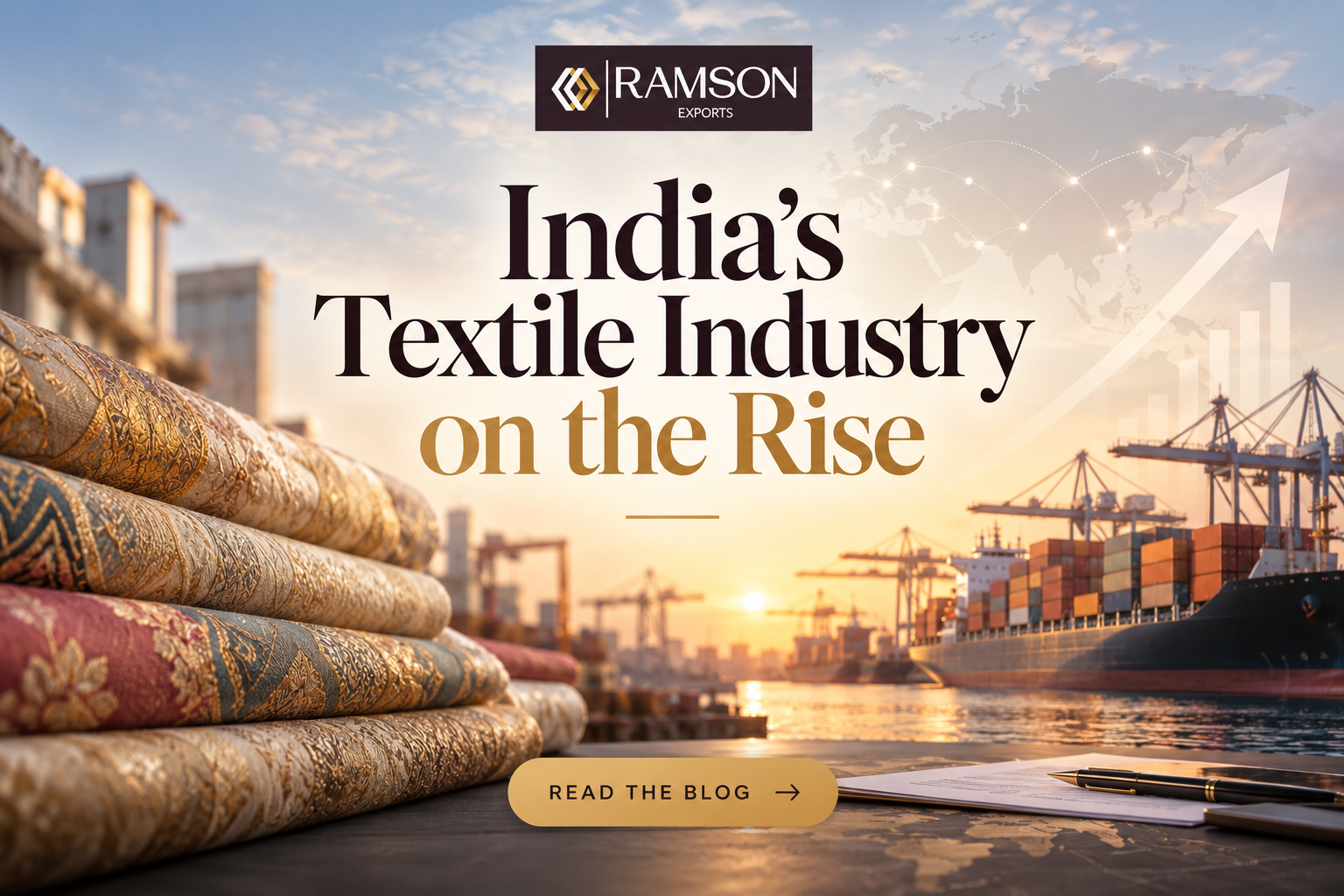
India’s textile industry is entering an exciting phase of growth. With a strong manufacturing base, skilled workforce and growing export network, India continues to strengthen its position in global textile markets.
In 2024–25, India exported approximately US$37.75 billion worth of textile and apparel products, making it the world’s sixth-largest exporter in this sector.
Now, the Union Budget 2026–27 has proposed a ₹1,500 crore Integrated Programme for the Textile Sector. This initiative could further strengthen India’s manufacturing capabilities and create new opportunities for textile exporters.
What Does the ₹1,500 Crore Programme Focus On?
The programme focuses on five major areas:
- Fibre development
- Textile cluster expansion and employment
- Handloom and handicrafts
- The Tex-Eco initiative
- Upgraded textile skilling through Samarth 2.0
Among these areas, the Textile Expansion and Employment Scheme holds particular importance for manufacturers. It supports machinery upgrades, better technology and common testing and certification facilities.
As a result, textile manufacturers could improve production efficiency, product consistency and quality standards. These improvements can also help Indian suppliers meet international buyer expectations.
Why Could This Matter for Global Textile Buyers?
Today, international buyers look beyond price when choosing a fabric supplier. They also expect consistent quality, reliable production, accurate specifications and timely deliveries.
Therefore, investment in textile infrastructure could give Indian manufacturers an advantage.
The government is also developing PM MITRA Parks, with seven locations finalized across India, including Gujarat. These parks aim to connect different stages of textile manufacturing within integrated industrial hubs.
Furthermore, India is expanding its focus on man-made fibre (MMF) fabrics, technical textiles, recycling and new-age fibres. This shift could help Indian manufacturers explore higher-value products and reach new international markets.
What Does This Mean for Indian Fabric Exporters?
For Indian exporters, the opportunity goes beyond increasing production. Instead, the focus should be on building stronger export-ready manufacturing systems.
This means improving quality control, customization, documentation and production consistency. Moreover, exporters must understand the specific requirements of different international markets.
Global buyers increasingly prefer long-term sourcing partners over transactional suppliers. Consequently, manufacturers that combine product variety, dependable supply and quality assurance can build stronger international relationships.
How Ramson Exports Can Help
Ramson Exports supports international B2B buyers looking for reliable fabric sourcing from India. With 15+ years of industry experience, 25,000+ designs, 5,00,000+ metres of monthly production capacity, 50+ global clients and exports to 10+ countries, Ramson offers diverse fabric options and customized solutions. In addition, its quality-focused approach helps buyers find fabrics that match their market requirements and applications.
FAQs
1. How much did India export in textiles and apparel in 2024–25?
India exported approximately US$37.75 billion worth of textile and apparel products during 2024–25.
2. What is the ₹1,500 crore textile programme?
It is an Integrated Programme for the Textile Sector announced in Budget 2026–27. It focuses on five key areas, including fibre development, textile clusters, handlooms, sustainability initiatives and skill development.
3. How can technology upgrades help textile exporters?
Modern machinery and better testing facilities can improve production efficiency, fabric consistency and quality control. Consequently, exporters can serve international buyers more effectively.
4. What are PM MITRA Parks?
PM MITRA Parks are integrated textile manufacturing hubs. They aim to bring different stages of the textile value chain together and provide modern industrial infrastructure.
5. How can international buyers source fabrics from India?
International buyers can partner with experienced Indian fabric exporters. They should evaluate fabric quality, customization options, sampling, production capacity and export experience before placing bulk orders.