
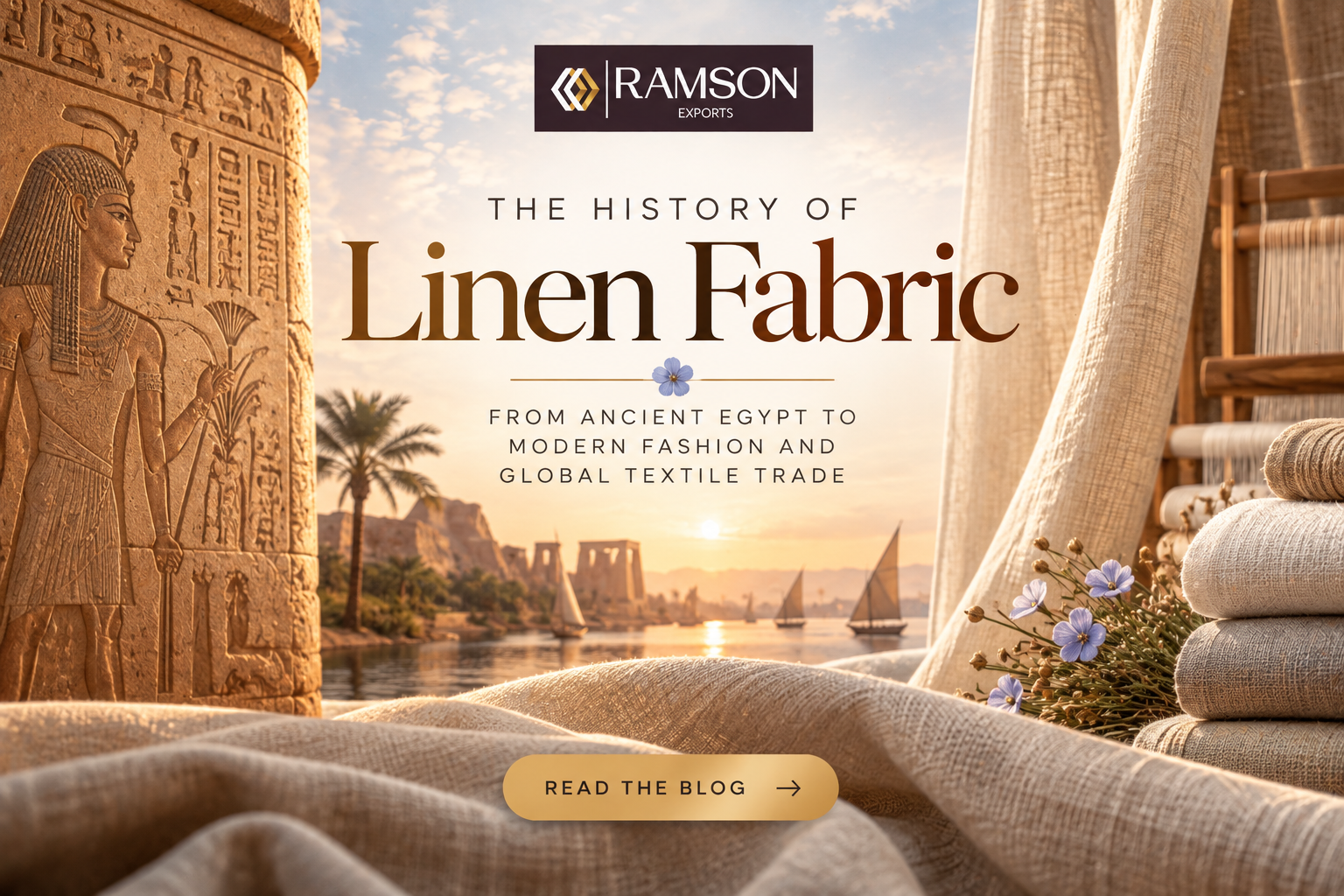
Linen is one of the world’s oldest textile fabrics. Even today, it holds an important place in modern fashion and international textile sourcing. Manufacturers create linen by extracting fibres from the flax plant. For thousands of years, people have valued its durability, lightweight feel and distinctive natural texture.
From ancient Egyptian households and royal tombs to contemporary fashion collections, linen has travelled through centuries of craftsmanship, trade and changing fashion trends.
Linen in Ancient Egypt
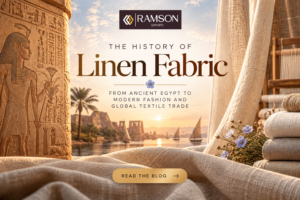
The history of linen dates back to ancient Egypt. People cultivated flax and processed its fibres into textiles as early as the Dynastic period, around 3100 BCE. Archaeological discoveries show that Egyptians used linen for clothing, household textiles and mummification.
Fine linen held particular importance in Egyptian society. For example, The Metropolitan Museum of Art preserves a New Kingdom linen cloth made from exceptionally fine thread. Creating such delicate fabric required considerable skill and months of dedicated work.
Moreover, Egypt developed an extensive textile trade network. Traders transported Egyptian linen to Mediterranean regions, Arabia and India. This shows that international textile sourcing has a much longer history than many people realise.
How Linen Became a Global Textile
Over time, flax cultivation and linen production spread across Europe and other regions. However, producing quality linen requires several carefully managed stages.
First, farmers grow and harvest flax plants. Manufacturers then dry and ret the stems to separate the fibres. After that, they comb, spin and weave the fibres into linen fabric.
Each stage influences the final fabric’s texture, strength and appearance.
For centuries, linen remained an important textile. However, the Industrial Revolution changed the market. Improvements in cotton cultivation and manufacturing made cotton more affordable and commercially accessible. As a result, cotton gradually reduced linen’s dominance in the textile industry.
Linen in Modern Fashion and Textile Trade
Today, linen continues to attract fashion designers and textile buyers. Its breathable structure, natural appearance and distinctive texture make it a popular choice for shirts, dresses, trousers, jackets, summer collections and premium home textiles.
For international buyers, choosing linen involves more than evaluating its appearance. They should also examine fabric composition, GSM, width, weave, finishing, colour consistency, shrinkage, softness, quality inspection and MOQ.
Furthermore, different applications require different fabric specifications. Some buyers prefer pure linen, while others choose linen blends to achieve specific textures, performance characteristics or cost requirements.
Therefore, choosing an experienced fabric supplier plays an important role in achieving consistent results across bulk orders.
How Ramson Exports Can Help
Ramson Exports provides fabric solutions for international B2B buyers seeking quality, variety and customization. With 15+ years of textile experience, 25,000+ designs, 5,00,000+ metres of monthly production capacity, 50+ global clients and exports to 10+ countries, Ramson helps buyers explore fabric options that match their collections and market requirements. Its quality-focused approach supports reliable sourcing for different textile applications.
FAQs
1. What is linen fabric made from?
Manufacturers produce linen from fibres extracted from the flax plant, scientifically known as Linum usitatissimum.
2. How old is linen fabric?
Linen production in ancient Egypt dates back to at least the Dynastic period, around 3100 BCE.
3. Why did ancient Egyptians use linen?
Ancient Egyptians used linen for clothing, household textiles and mummification. They particularly valued fine linen for its quality and delicate texture.
4. Is linen still used in modern fashion?
Yes. Fashion brands use linen for shirts, dresses, trousers, jackets and premium summer collections because of its breathable structure and natural appearance.
5. What should buyers check when sourcing linen fabric?
Buyers should examine composition, GSM, width, weave, finishing, shrinkage, colour consistency, MOQ and quality-control processes before placing bulk orders.