
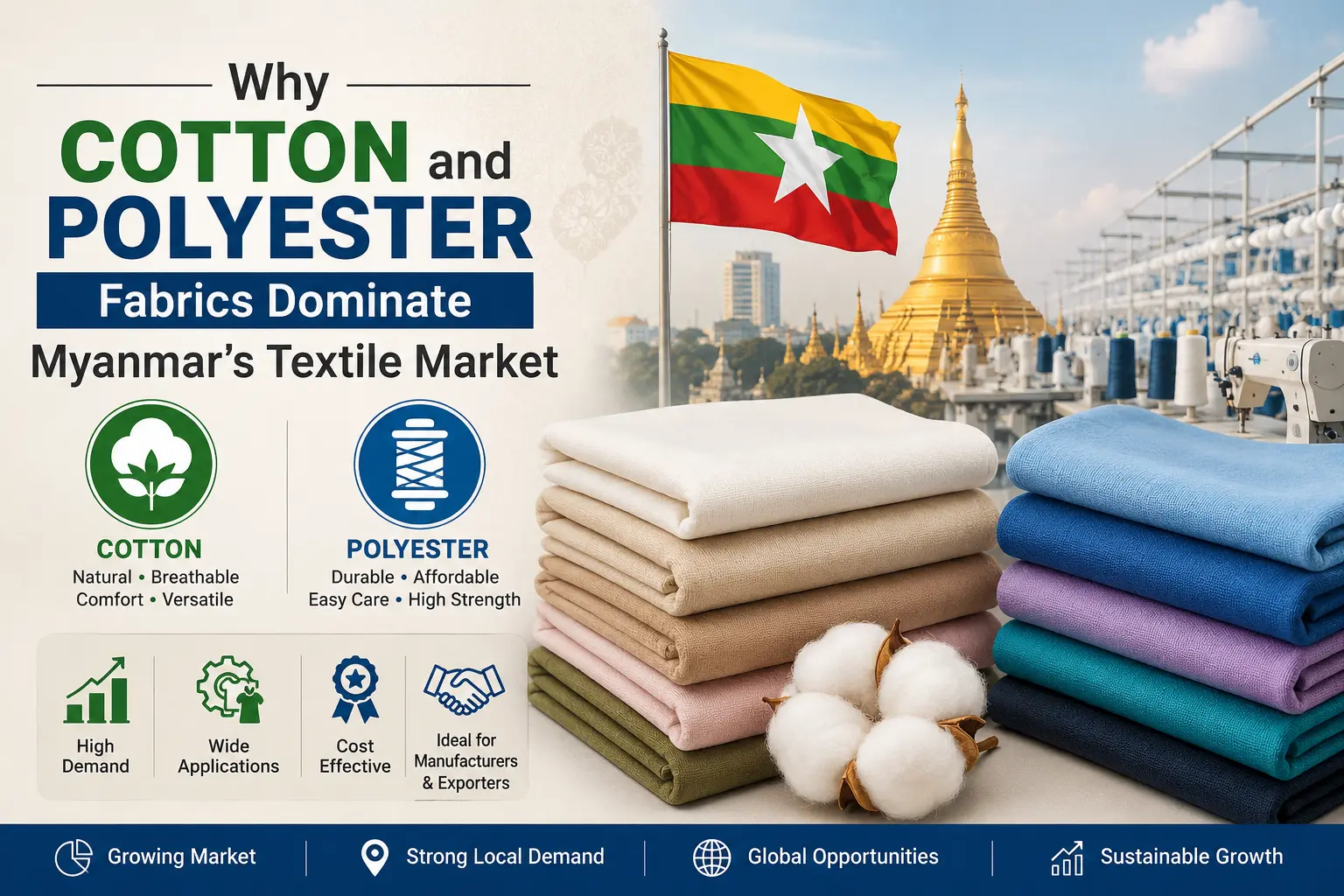
Myanmar’s textile industry is rapidly evolving, driven by increasing demand from garment manufacturers, wholesalers, and fashion retailers. As one of Southeast Asia’s emerging textile hubs, Myanmar relies heavily on cotton and polyester fabrics due to their affordability, versatility, and suitability for local consumer preferences. For businesses seeking reliable sourcing solutions, Ramson Export has positioned itself as a trusted supplier of premium cotton and polyester fabrics tailored to Myanmar’s growing market needs.Cotton: The most common textile used for everyday apparel, particularly for making the longyi (men’s paso and women’s htamein) worn daily by many, as it is lightweight and comfortable.
Why Cotton and Polyester Fabrics Dominate Myanmar’s Textile Market
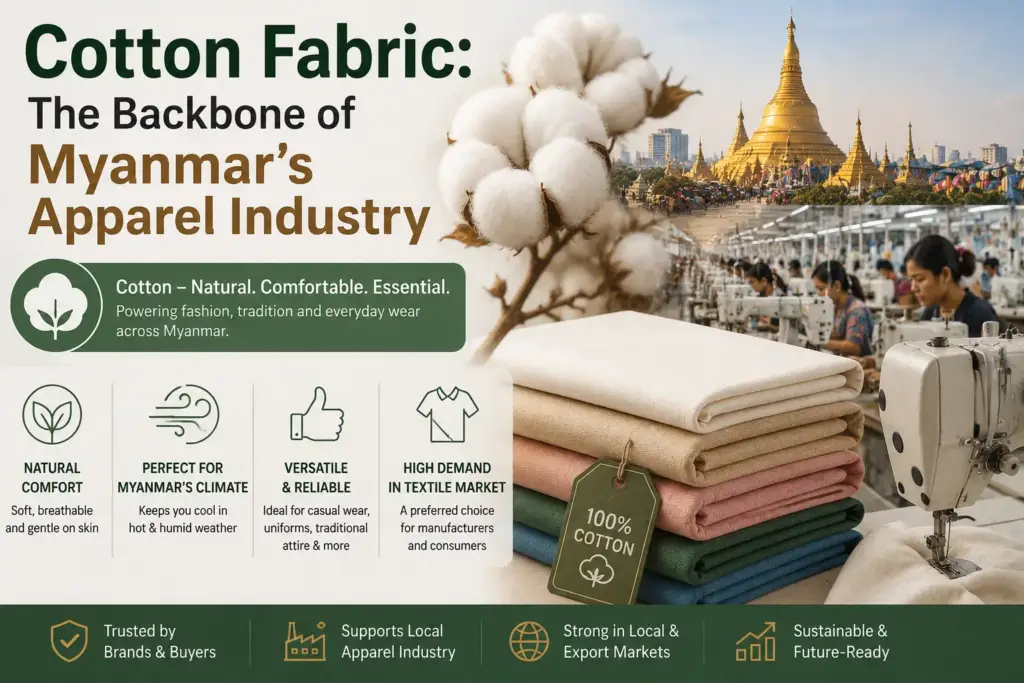
1. Cotton Fabric: The Backbone of Myanmar’s Apparel Industry
Cotton remains a dominant force in Myanmar’s textile market because of its natural comfort, breathability, and suitability for tropical climates. In bustling textile trading centers like Myanmar Textile Trading Co. Ltd cotton fabrics are highly favored for casual wear, uniforms, and traditional clothing production.
Key reasons for cotton’s popularity include:
- Excellent breathability for Myanmar’s hot and humid weather
- Strong demand in everyday wear and mass-market apparel
- Consumer preference for natural, skin-friendly materials
- Versatility for local and export garment production
Major textile hubs such as have consistently shown strong demand for cotton-based fabrics, making suppliers like Ramson Export essential partners for wholesalers seeking stable quality and competitive pricing.
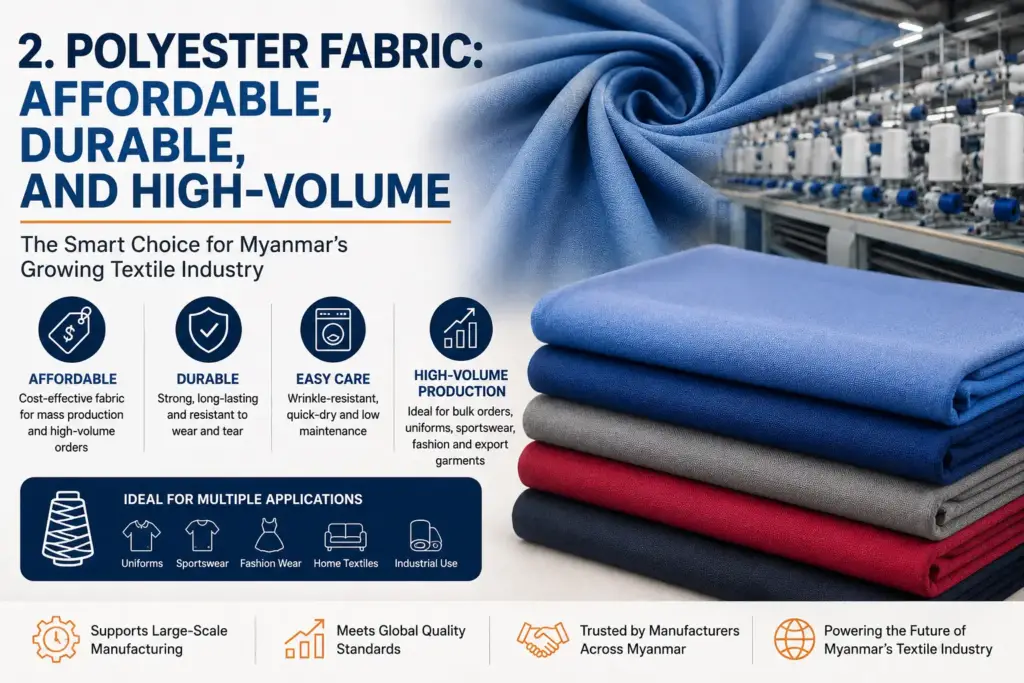
2. Polyester Fabric: Affordable, Durable, and High-Volume
Polyester fabric has become equally crucial in Myanmar due to its cost-effectiveness and durability. In Sanwon Textile Co. Ltd and other major wholesale textile zones, polyester and blended fabrics dominate because they offer:
- Lower production costs for mass manufacturing
- Wrinkle resistance and easy maintenance
- High durability for uniforms and workwear
- Greater flexibility for fashion, sportswear, and commercial applications
Myanmar’s expanding garment manufacturing sector increasingly depends on polyester for export-oriented production, where cost efficiency and scalability are essential. Ramson Export’s broad polyester fabric portfolio helps Myanmar businesses maintain quality while maximizing profitability.
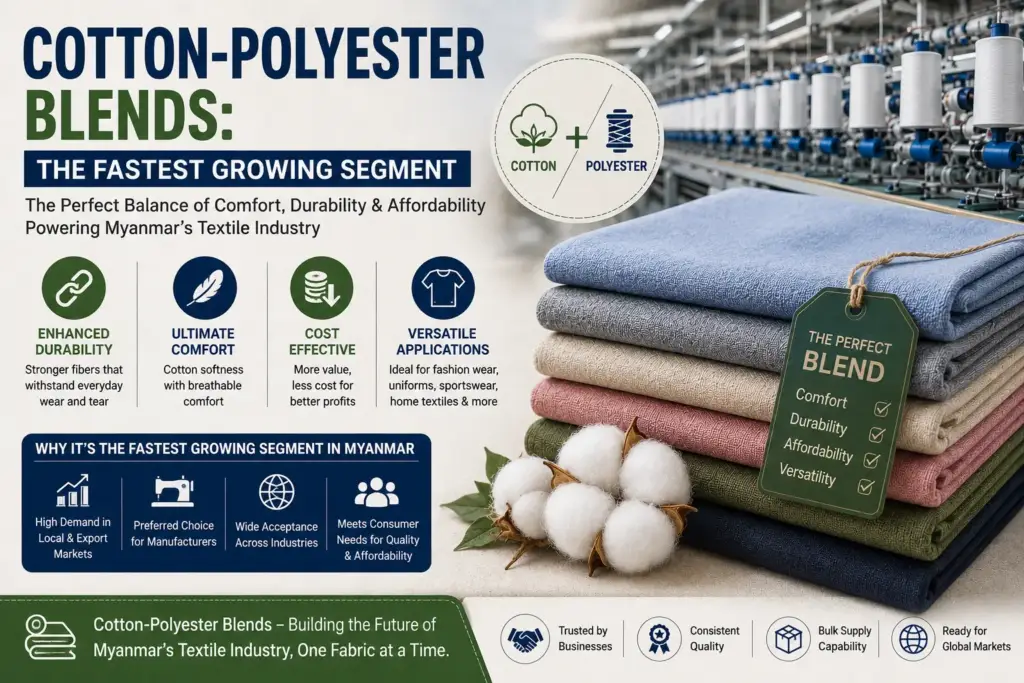
3. Cotton-Polyester Blends: The Fastest Growing Segment
Blended fabrics are gaining momentum as Myanmar’s apparel industry seeks the best of both worlds—comfort and affordability. Textile traders across key commercial centers like Myanmar Garment Manufacturers Association (MGMA) increasingly source cotton-polyester blends because they offer:
- Enhanced durability with cotton softness
- Budget-friendly pricing for wholesalers
- Better resistance to shrinkage
- Wide applications across uniforms, fashionwear, and industrial textiles
For Myanmar wholesalers and manufacturers, Ramson Export provides customized blended fabric solutions that meet evolving market demands while supporting scalable business growth.
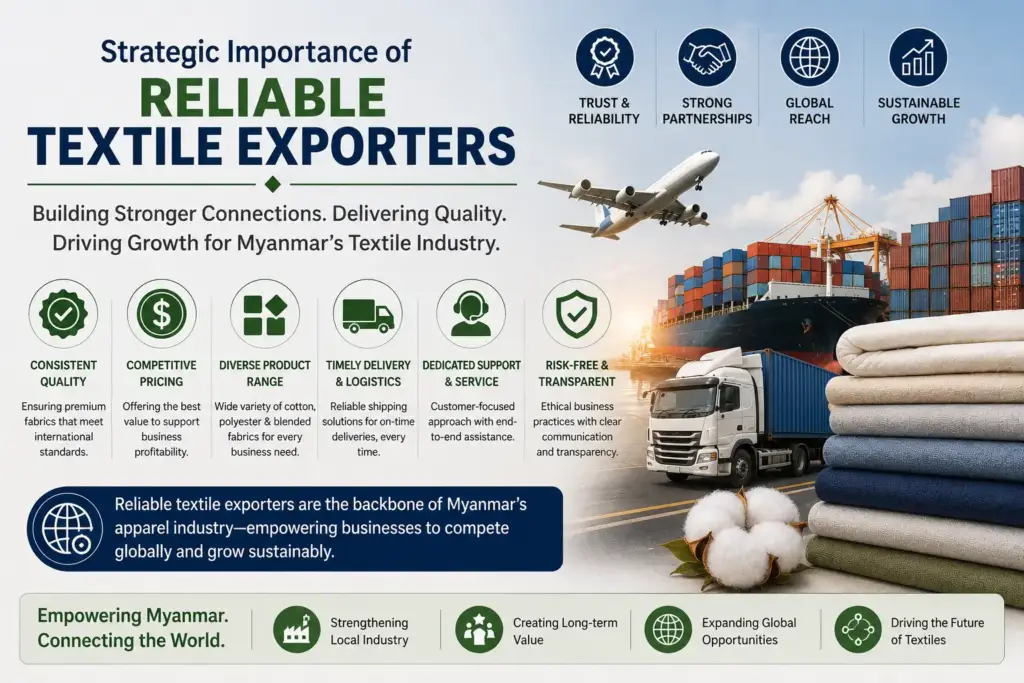
4. Strategic Importance of Reliable Textile Exporters
Myanmar’s textile sector depends significantly on international sourcing, particularly from India and neighboring manufacturing economies. Reliable exporters like Ramson Export help bridge the supply gap by delivering:
- Consistent quality assurance
- Competitive wholesale pricing
- Diverse product ranges
- Flexible B2B export partnerships
- Timely international logistics support
As Myanmar’s garment and textile ecosystem expands, sourcing from dependable exporters becomes a critical factor for wholesalers, retailers, and manufacturers aiming to stay competitive, especially in large-scale trade centers such as Maple Trading Co., Ltd .
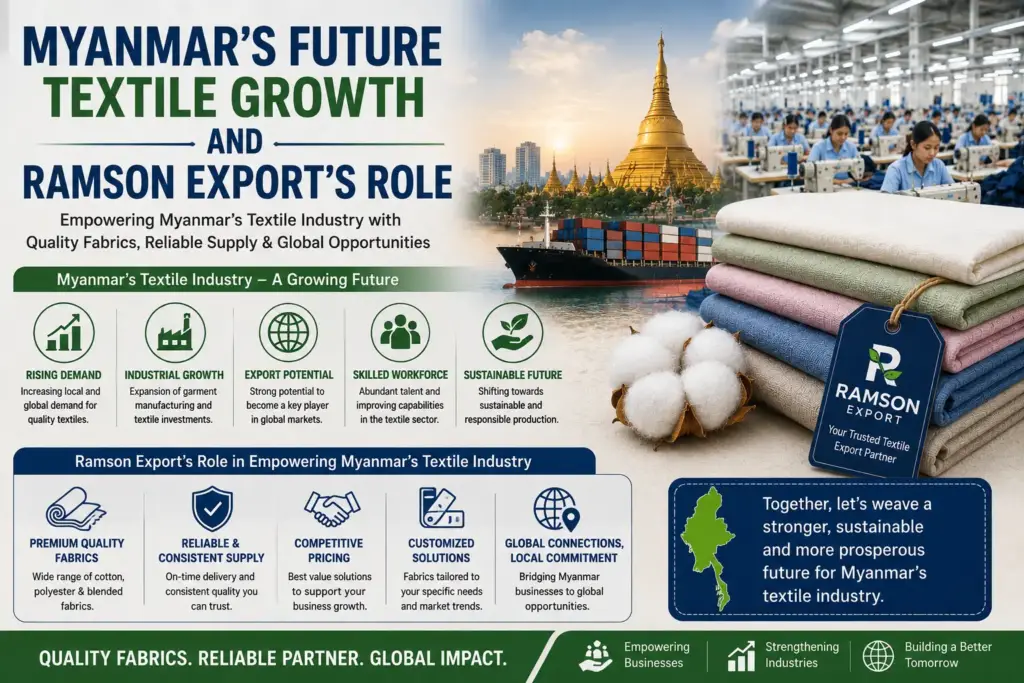
5. Myanmar’s Future Textile Growth and Ramson Export’s Role
With rising investments in garment production and increasing demand for affordable, scalable fabrics, Myanmar’s textile market is poised for substantial growth. Cotton and polyester will continue to dominate due to their practicality, market familiarity, and industrial adaptability.
Ramson Export is strategically positioned to serve Myanmar’s textile businesses by offering:
- High-quality cotton fabrics
- Premium polyester materials
- Customized blended solutions
- Wholesale-friendly export services
For Myanmar wholesalers, garment manufacturers, and textile traders operating in key regions like , partnering with a trusted exporter like Ramson Export ensures long-term supply stability and competitive market advantage.
FAQs
1. Why are cotton fabrics so popular in Myanmar?
Cotton fabrics are highly preferred in Myanmar because they are breathable, lightweight, and ideal for the country’s tropical climate. They are widely used for daily wear, uniforms, and traditional garments.
2. Why does Myanmar’s textile market rely heavily on polyester fabrics?
Polyester fabrics are affordable, durable, wrinkle-resistant, and suitable for large-scale garment manufacturing, making them a preferred choice for wholesalers and apparel businesses.
3. Which are the top textile markets in Myanmar?
Some of the leading textile markets in Myanmar include Bogyoke Aung San Market, Theingyi Zay Market, Zegyo Market , Mingalar Market , Bayintnaung Wholesale Market , and Yuzana Plaza Textile Center.
4. What are cotton-polyester blended fabrics used for in Myanmar?
Cotton-polyester blends are commonly used for uniforms, fashionwear, industrial textiles, and wholesale apparel due to their balance of comfort, durability, and affordability.
5. How can Ramson Export support Myanmar’s textile businesses?
Ramson Export provides premium cotton, polyester, and blended fabrics with competitive pricing, reliable quality, and scalable export solutions tailored to Myanmar’s textile market.