
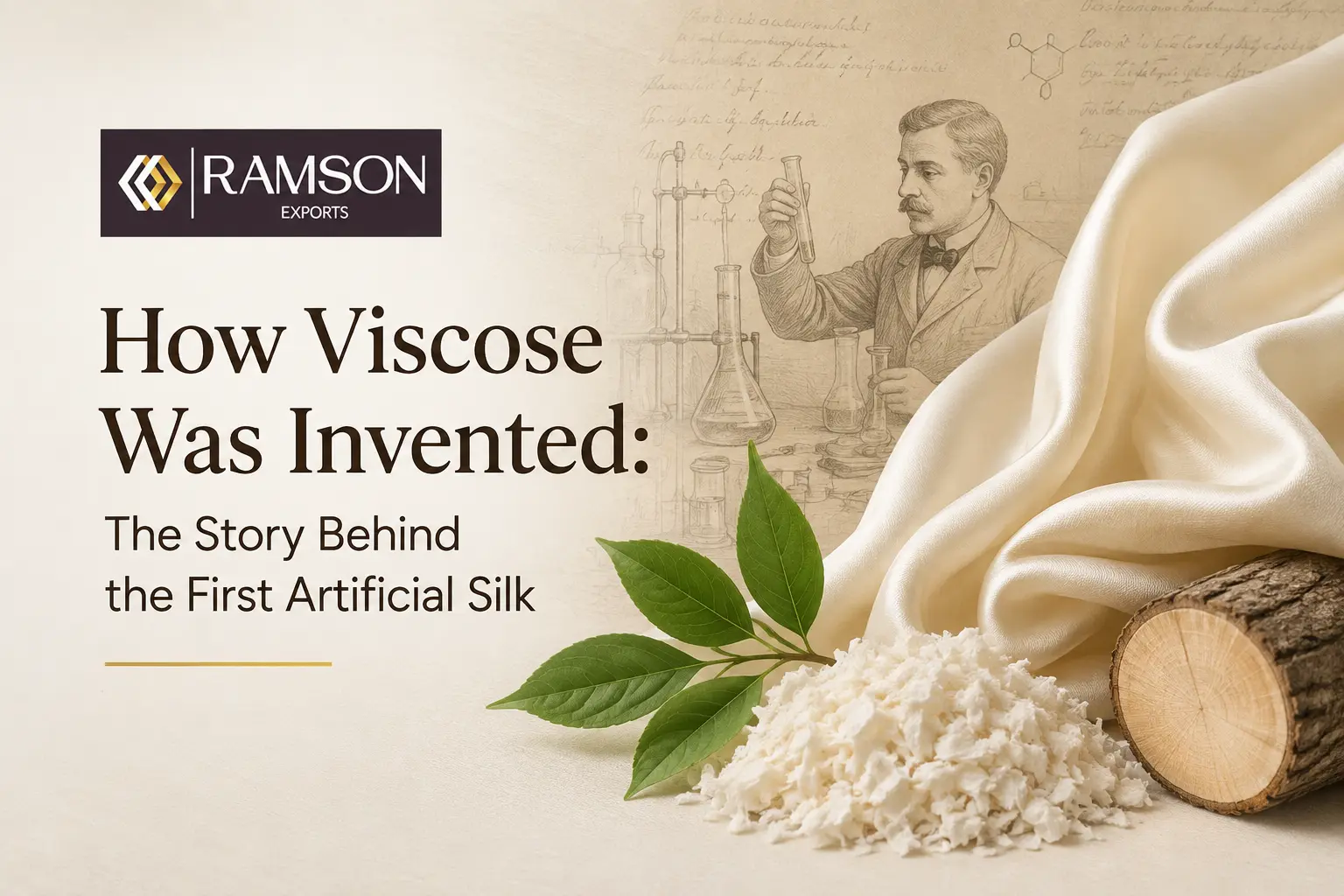
Viscose is one of the most widely used regenerated cellulose fabrics in modern textiles, known for its soft hand feel, fluid drape and silk-like appearance. But before viscose became a popular fabric for fashion and apparel, scientists were trying to solve a fascinating problem: how could the qualities of natural silk be recreated using cellulose?
The answer eventually led to the development of what was once called “artificial silk” — and later became known as viscose rayon.
The Search for Artificial Silk
The story began in Europe during the late 19th century, when natural silk was expensive and difficult to produce at scale. Researchers began experimenting with cellulose, a natural polymer found in plant materials such as wood and cotton.
In the 1880s, French chemist Hilaire de Chardonnet developed an early form of artificial silk using cellulose-based material. His work helped demonstrate that cellulose could potentially be transformed into a fine, silk-like fibre.
However, early versions had significant limitations, particularly related to flammability and production safety. Further research was needed to create a more practical manufacturing process.
How Viscose Was Developed
The major breakthrough came from researchers working on ways to dissolve cellulose and regenerate it as a fibre. In the late 19th and early 20th centuries, the viscose process was developed using cellulose treated with chemicals to create a soluble cellulose derivative.
This material could then be forced through extremely fine openings called spinnerets. Once regenerated, it formed continuous filaments that could be processed into textile fibres.
The name “viscose” came from the viscous nature of the cellulose solution used during the process.
Unlike natural silk, which comes from silkworms, viscose is produced from regenerated cellulose. This made it possible to manufacture silk-like fibres on a much larger industrial scale.
Why Viscose Became Important in Textiles
Viscose offered several characteristics that appealed to textile manufacturers and fashion brands. It could provide a soft touch, attractive drape, good colour absorption and a comfortable feel against the skin.
Today, viscose fabric is used in dresses, shirts, linings, scarves, ethnicwear and many other fashion applications. Its ability to combine a luxurious appearance with versatile textile performance has made it an important material for fabric manufacturers and apparel businesses.
For B2B buyers, factors such as fibre composition, GSM, width, finishing, colour consistency and shrinkage are important when sourcing viscose fabric for bulk production.
How Ramson Exports Can Help
Ramson Exports helps international textile buyers source fabrics with a focus on consistent quality, customization and export requirements. With 15+ years of industry experience, a diverse fabric portfolio and 5,00,000+ metres of monthly production capacity, Ramson can support fashion brands, garment manufacturers and wholesalers looking for reliable fabric sourcing solutions. Buyers can discuss fabric specifications, designs, finishing requirements and bulk production needs with Ramson as a potential global textile partner.
FAQs
1. What is viscose fabric made from?
Viscose is made from regenerated cellulose, commonly sourced from plant-based materials such as wood pulp.
2. Why was viscose called artificial silk?
Viscose was developed to create a manufactured fibre that could reproduce some of the soft feel and appearance of natural silk.
3. Who invented artificial silk?
Hilaire de Chardonnet developed one of the earliest commercially demonstrated forms of artificial silk in the 1880s using cellulose-based material.
4. Is viscose a natural or synthetic fabric?
Viscose is generally classified as a regenerated cellulosic fibre. Its raw material is natural cellulose, but it undergoes significant chemical processing before becoming textile fibre.
5. What is viscose fabric commonly used for?
Viscose is widely used in apparel, dresses, shirts, scarves, linings, ethnicwear and other fashion products where softness and fluid drape are desirable.