
Surat is not just a city — it is the heartbeat of India’s textile industry. From delicate georgette to durable polyester, from airy linen blends to luxurious velvet, Surat’s fabric exporters supply fashion brands, retailers, and garment manufacturers across more than 100 countries. This guide walks you through everything you need to know to make a smart, confident purchase.
1. Why Surat Is the World’s Fabric Hub
Surat earned its title as “The Textile City of India” over centuries of weaving tradition. Today it combines that craftsmanship heritage with ultra-modern manufacturing infrastructure. The city is home to thousands of weaving units, dyeing and printing mills, and finishing houses — all within a compact geography that makes the supply chain remarkably efficient.
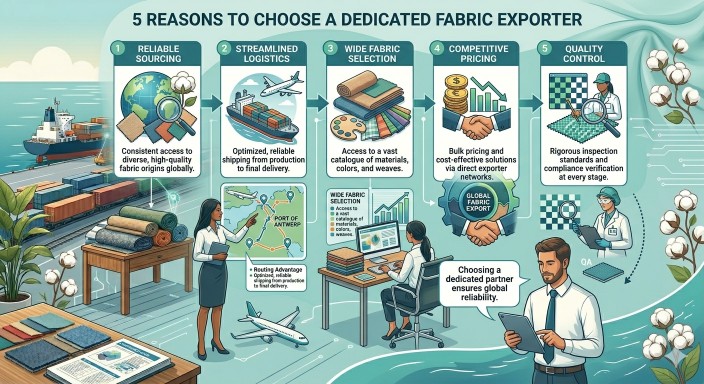
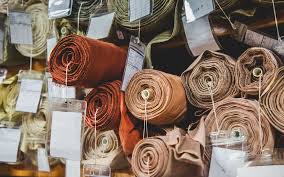
For a global buyer, this concentration is a massive advantage. You can get a wide variety of fabrics — polyester, linen, cotton blends, viscose, jacquard, chiffon, crepe, velvet, georgette, and more — from a single city, often from a single exporter. That means fewer logistics headaches, faster turnarounds, and better pricing through economies of scale.
Surat is also well-connected to major Indian ports — Nhava Sheva (JNPT) near Mumbai and Mundra in Gujarat — making ocean freight to Europe, the Middle East, the US, and Southeast Asia straightforward and cost-effective.
Did You Know?
Surat produces more than 28 million meters of fabric every single day — enough to wrap the Earth’s equator roughly 11 times, daily.
2. What to Look for in a Fabric Exporter
Not every exporter in Surat is the same. Quality, reliability, communication, and ethics vary widely. Here is what separates a trustworthy fabric exporter from the rest:
Production Capacity & Range
A good exporter should be able to produce a wide variety of fabrics consistently and at scale. Ask about their looms, dyeing machines, and finishing equipment. A manufacturer-exporter (one who owns their production) gives you more control and better pricing than a trading house that outsources everything.
Quality Control Systems
Does the exporter have an in-house quality control team? Do they test fabrics for GSM (weight), tensile strength, color fastness, shrinkage, and pilling? Ask for test reports. Reputable exporters will have these readily available and will also arrange third-party lab testing on request.
Communication & Responsiveness
In international trade, slow or unclear communication costs money. Your exporter should respond quickly, clearly, and proactively — especially during sampling, production, and shipping stages. If a supplier takes more than 48 hours to reply to a basic inquiry, consider it a signal.
Export Experience & Track Record
Look for exporters with verifiable experience shipping to your region. They should understand your country’s import regulations, labelling requirements, and duty structures. References or testimonials from buyers in your country are a major plus.
BUYER’S CHECKLIST — EVALUATING AN EXPORTER
- Manufacturer or trader? (Manufacturer preferred for price and control)
- Can they provide fabric samples before bulk order?
- Do they share GSM, colour fastness, and shrinkage test reports?
- Have they shipped to your country before?
- Do they have relevant certifications (ISO, OEKO-TEX, etc.)?
- Can they handle custom colours, prints, or weaves?
- Are their payment terms and MOQs reasonable?
- Is their communication clear and fast?
3. Step-by-Step: How to Place Your First Order
Placing a fabric order from Surat for the first time can feel complex. Here is a simple process that experienced global buyers follow:
Define Your Fabric Requirements
1. Know what you need before reaching out:
fabric type, weight (GSM), colour, finish, composition (e.g. 70% polyester, 30% viscose), end use, and quantity. The more specific you are, the faster and more accurate the exporter’s response will be.
2. Request Samples:Never skip this step. Request swatches or sample cuts of the fabric. Evaluate colour, texture, hand-feel, weight, and construction. Good exporters dispatch samples within 5–7 working days.
3. Negotiate MOQ, Price & Payment Terms:
Discuss Minimum Order Quantity, price per meter, and payment terms. Standard terms include 30–50% advance and balance before shipment. For repeat buyers, terms often become more flexible.
4. Confirm the Proforma Invoice:
Before making any payment, review and confirm the Proforma Invoice (PI). It should detail fabric specs, quantity, price, delivery timeline, and payment terms.
5. Production & Quality Check:
Once advance is received, production begins. Ask for in-process quality photos or videos. Many exporters offer pre-shipment inspections by their own QC team or a third-party agency.
6. Shipping & Documentation:
Your exporter prepares all shipping documents: commercial invoice, packing list, bill of lading, and a certificate of origin. Review all documents carefully before shipment is released.
4. Red Flags to Watch Out For
As with any international trade, there are exporters who cut corners. Here are the warning signs you should never ignore:
⚠ Warning
If an exporter refuses to send samples, avoids sharing test reports, or asks for 100% advance payment with no references — walk away. These are classic signs of an unreliable supplier.
- No physical address or factory photos — always verify the manufacturer’s location and production setup.
- Prices dramatically below market rates — rock-bottom prices often mean compromised quality, poor dye, or underweight fabric (less GSM than claimed).
- No export history or references — experienced exporters should be able to share shipper credentials or references from existing buyers.
- Vague delivery timelines — a professional exporter will give you a realistic, specific lead time, not a vague “2–4 weeks.”
- No written agreement — always insists on a written purchase order or contract before paying.
5. Certifications That Matter
For global buyers — especially those selling to European, US, or Australian markets — supplier certifications are not optional. They provide legal protection, build consumer trust, and are often required by major retailers.
OEKO-TEX Standard 100
This certification confirms that every component of the fabric — thread, dye, finish — has been tested for harmful substances. If you are selling children’s wear or skin-contact garments, this is essential.
ISO 9001 (Quality Management)
ISO 9001 signals that the exporter has documented, auditable quality management systems. It doesn’t certify the fabric itself but guarantees consistent processes, which directly impact consistency in your orders.
GOTS (Global Organic Textile Standard)
Required if you are sourcing organic cotton or other natural fibres marketed as “organic.” GOTS covers both the chemical standards and social criteria.
Better Cotton Initiative (BCI)
If your sourcing policy requires sustainably farmed cotton, BCI membership from your supplier is a strong indicator of responsible procurement.
6. Shipping & Documentation Basics
Understanding the basics of freight and documentation will save you from expensive surprises.
Incoterms
The most common terms for fabric shipments from India are FOB (Free on Board) and CIF (Cost, Insurance, Freight). Under FOB, you arrange ocean freight and insurance. Under CIF, the exporter handles it. For new buyers, CIF is simpler; for experienced importers, FOB often gives more control and cost efficiency.
Key Shipping Documents
- Commercial Invoice (with HS code)
- Packing List
- Bill of Lading (for ocean freight) or Airway Bill (for air freight)
- Certificate of Origin (for preferential duty rates)
- GST Invoice (Indian tax compliance)
Ramson Exports Tip
Always confirm the HS (Harmonized System) code for your fabric type before shipping. The wrong HS code can lead to higher import duties or customs held at the destination country. Your exporter’s documentation team should be able to guide you on the correct code.
Frequently Asked Questions
Why is Surat considered the best city for fabric exports in India?
Surat produces over 40% of India’s total synthetic fabric. The city has a dense cluster of weavers, dyers, finishers, and exporters — meaning faster production, more variety, and competitive pricing. The proximity to Mundra and JNPT ports also makes logistics more efficient.
What is the typical MOQ for fabric from Surat?
MOQ varies by exporter and fabric type. At Ramson Exports, MOQ starts from 500 metres for standard fabrics. Custom colours, prints, or special weaves may require 1,000–2,000 metres per design.
How can I verify fabric quality before placing a bulk order?
Always request samples first. Evaluate colour, hand-feel, weight, and construction. Ask for lab test reports covering colour fastness, GSM, shrinkage, and tensile strength.
Does Ramson Exports ship worldwide?
Yes. Ramson Exports ships to buyers across Europe, the Middle East, the USA, Africa, and Southeast Asia. They handle all export documentation including GST invoices, packing lists, and certificates of origin.
Can I get custom fabric colours or prints?
Absolutely. Ramson Exports offers custom dyeing, printing, and finishing options. Share your Pantone shade or reference sample, and the team will match it. Lead times for custom colourways are typically 10–15 working days after sample approval.