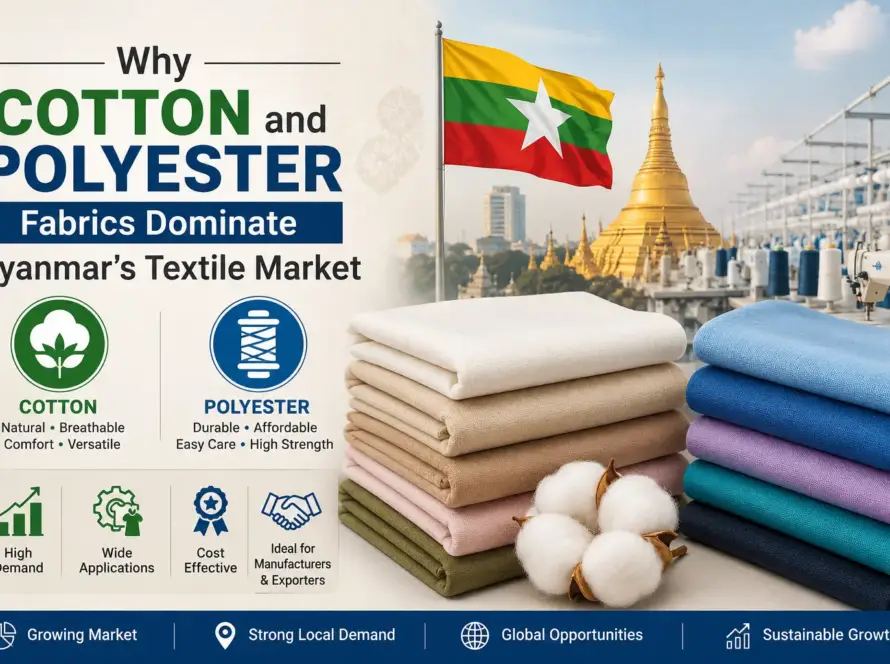

In the competitive garment industry, selecting the right fabric is essential for ensuring product quality, durability, and customer satisfaction. Each fabric type offers unique properties that influence the final product.
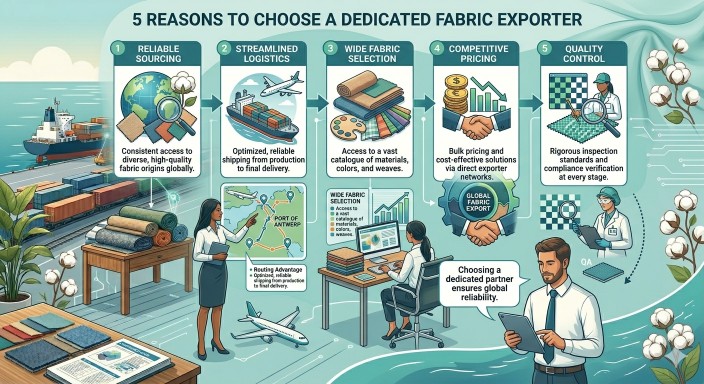
India’s textile sector is supported by strong manufacturers and exporters, including Ramson Export, who help businesses access reliable and high-quality fabric solutions globally.
Let’s explore the top 7 fabrics every garment manufacturer should know.
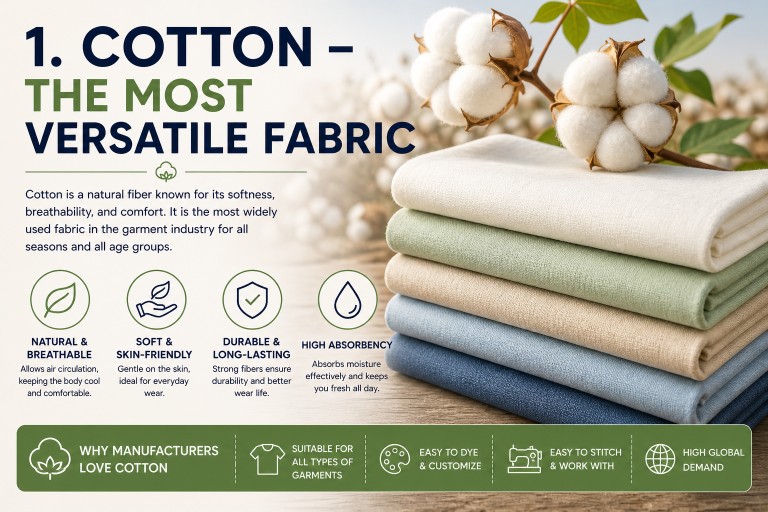
1. Cotton – The Most Versatile Fabric
Cotton is widely used due to its comfort and adaptability across different clothing categories.
Leading companies like Nahar Spinning Mills and Ramson Export utilize cotton extensively for high-quality garments.
Key benefits:
- Breathable and skin-friendly
- Suitable for all climates
- Easy to maintain
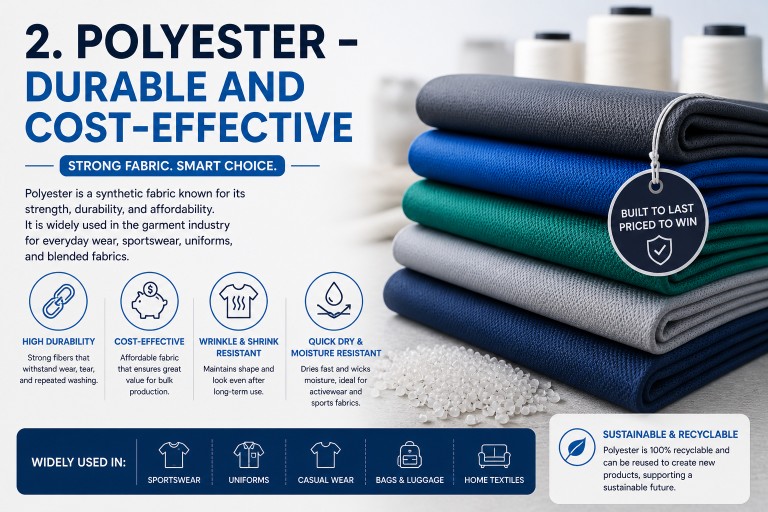
2. Polyester – Durable and Cost-Effective
Polyester is a preferred choice for its strength and affordability in large-scale production.
Manufacturers such as KPR Mill and Lux Industries are known for producing durable polyester-based garments.
Advantages:
- Wrinkle-resistant
- Long-lasting
- Budget-friendly
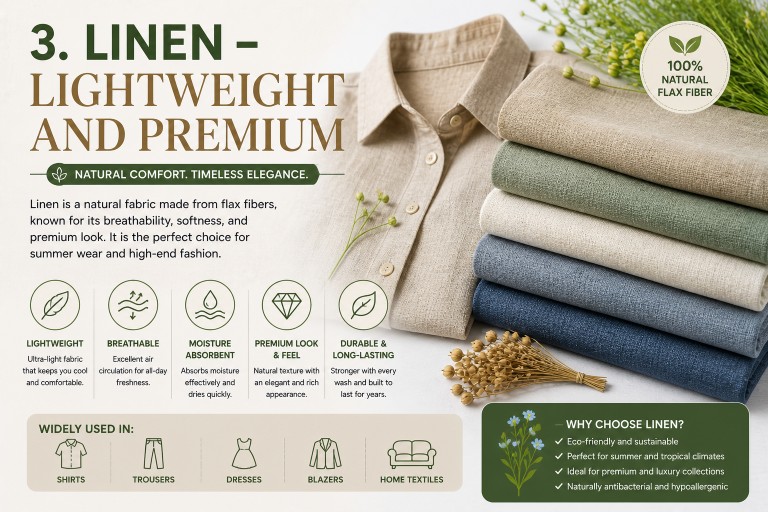
3. Linen – Lightweight and Premium
Linen is known for its premium feel and is ideal for summer clothing.
Top players like Bombay Dyeing and Donear Industries contribute to high-quality linen fabric production.
Benefits:
- Lightweight and breathable
- Elegant appearance
- High moisture absorption
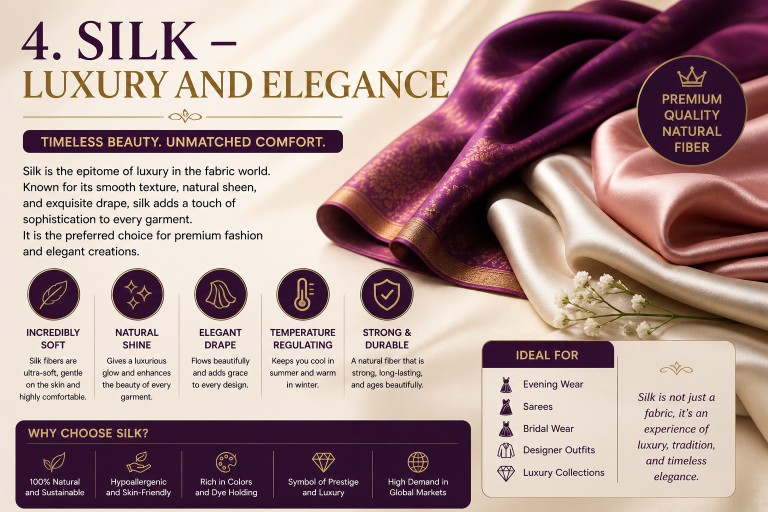
4. Silk – Luxury and Elegance
Silk is widely used in premium and designer wear due to its luxurious texture.
Companies such as Garden Silk Mills and Siyaram Silk Mills are recognized for their expertise in silk fabrics.
Features:
- Smooth and shiny finish
- High comfort
- Premium appeal
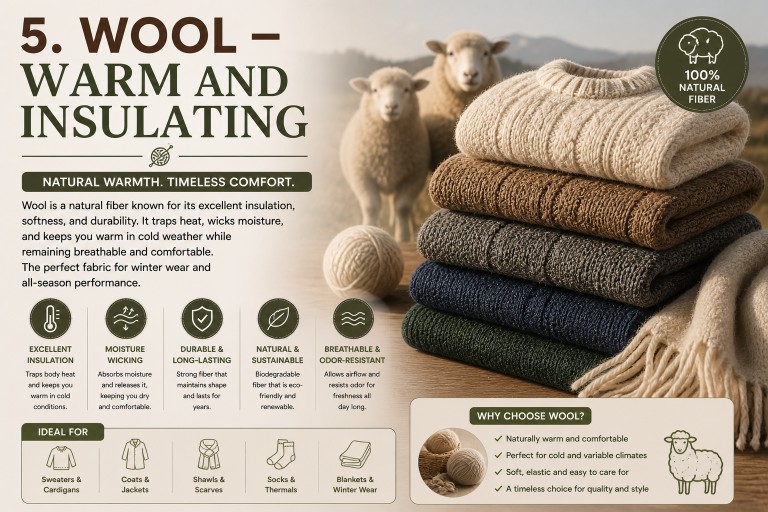
5. Wool – Warm and Insulating
Wool is essential for winter garments and offers excellent insulation.
Manufacturers like Oswal Woollen Mills and Reliance Industries contribute to wool and blended fabric segments.
Advantages:
- Retains heat
- Durable and flexible
- Moisture-resistant
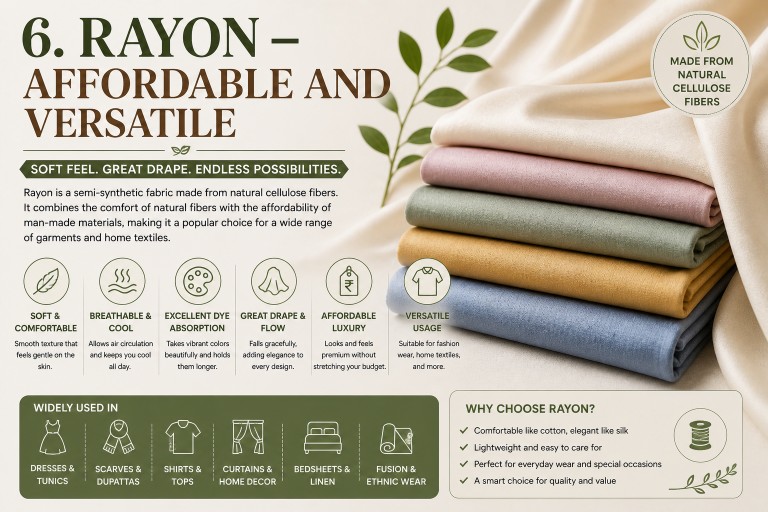
6. Rayon – Affordable and Versatile
Rayon is a cost-effective alternative that mimics natural fabrics.
Industry leaders such as Aditya Birla Group and Century Textiles are key players in rayon production.
Benefits:
- Soft and breathable
- Economical
- Versatile usage
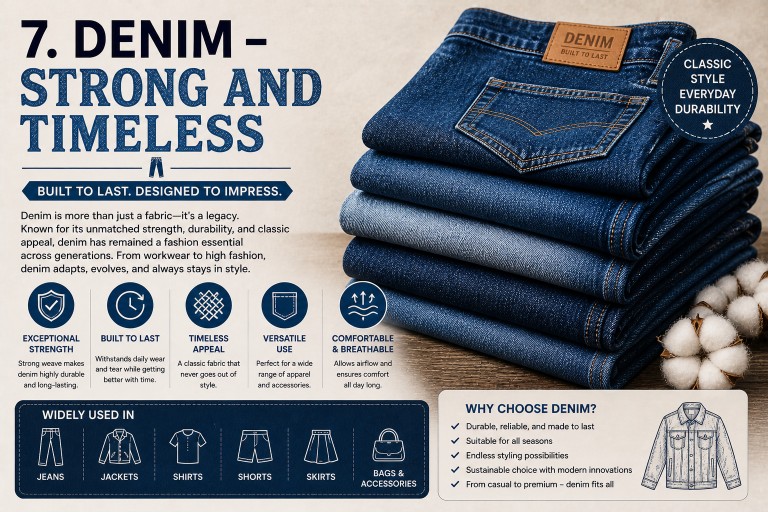
7. Denim – Strong and Timeless
Denim remains a staple in fashion due to its durability and style.
Companies like RSWM Limited and Black Rose Industries contribute to denim and related fabric manufacturing.
Key features:
- High durability
- Stylish and versatile
- Long-lasting
Conclusion
Understanding fabric types helps garment manufacturers create better products and meet market demands effectively. Each fabric—from cotton to denim—plays a unique role in the industry.
With support from reliable exporters like Ramson Export, businesses can ensure consistent quality and seamless supply, helping them grow in competitive global markets.
❓ FAQs
1. What are the most commonly used fabrics in garment manufacturing?
Cotton, polyester, linen, silk, wool, rayon, and denim are widely used in garment production.
2. Which fabric is best for daily wear?
Cotton is best for daily wear due to its comfort, breathability, and ease of maintenance.
3. Why is polyester popular in clothing?
Polyester is durable, wrinkle-resistant, and cost-effective, making it ideal for large-scale production.
4. What fabric is suitable for summer clothing?
Linen and cotton are ideal for summer due to their lightweight and breathable nature.
5. How do exporters help garment manufacturers?
Exporters ensure consistent supply, maintain quality standards, and help businesses access global markets.