
For international fashion brands, garment manufacturers, wholesalers and sourcing managers, fabric quality is one of the most important factors when selecting a textile supplier. A fabric may look attractive in a sample, but maintaining the same quality across bulk production is what determines whether an international order succeeds.
Understanding key textile quality standards helps buyers compare suppliers, reduce production risks and ensure that fabrics meet the requirements of their final products.
What Are Textile Quality Standards?
Textile quality standards are specifications and testing requirements used to evaluate the performance, appearance and consistency of fabrics. These standards can vary depending on the fabric type, application, destination market and buyer requirements.
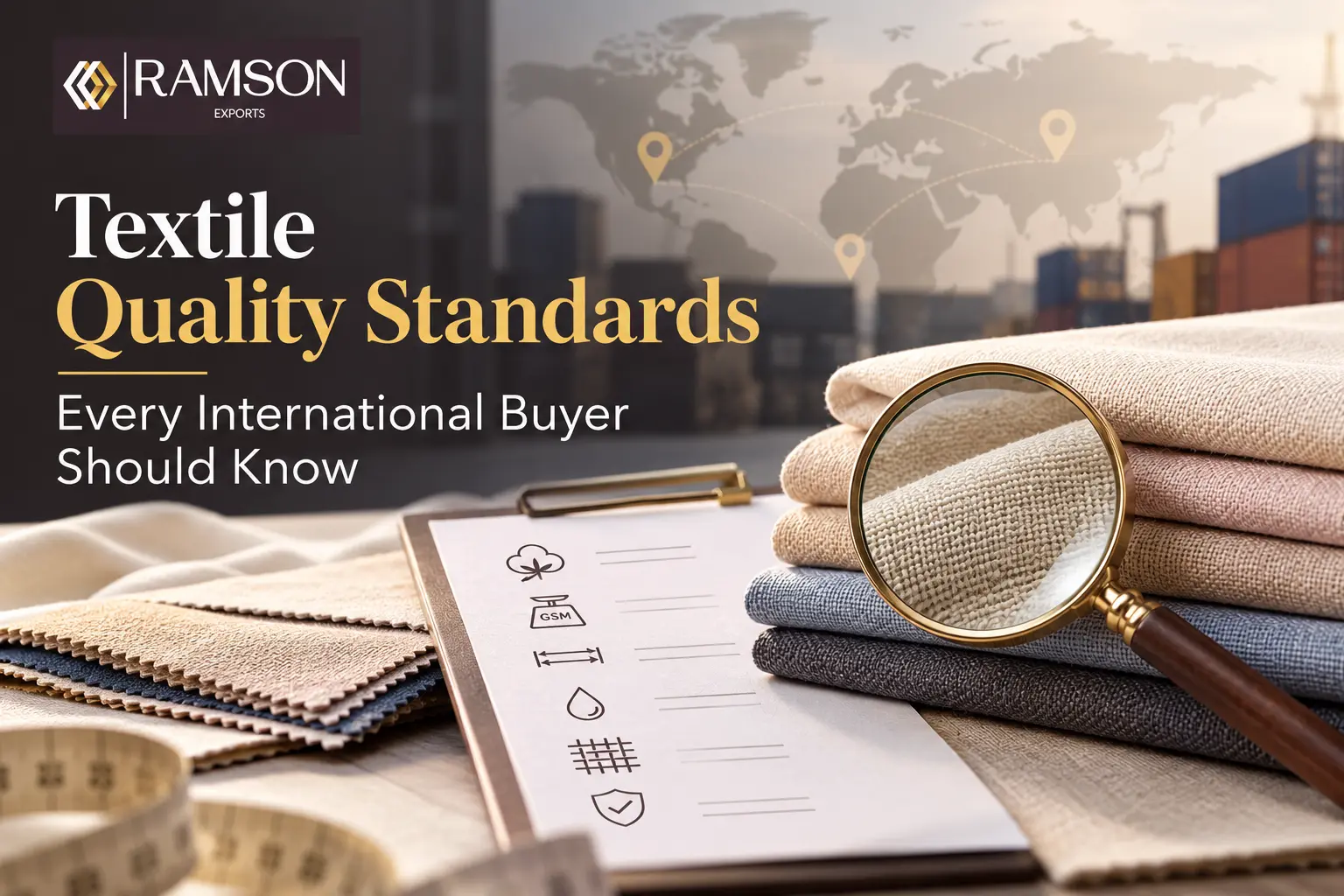
For an international fabric buyer, quality should not be judged only by appearance. Technical parameters such as fabric composition, GSM, width, colour fastness, shrinkage and strength may also need to be evaluated.
Key Fabric Quality Parameters
Fabric Composition
The fibre composition should match the agreed specification. Whether the fabric contains polyester, viscose, cotton, linen or a blend, accurate composition is important for product performance and labelling requirements.
GSM and Fabric Width
GSM, or grams per square metre, indicates fabric weight. Consistent GSM is particularly important when manufacturers are working from an approved sample.
Fabric width should also remain within the agreed tolerance because variations can affect cutting efficiency and fabric consumption.
Colour Fastness
Colour fastness measures how well a fabric retains its colour when exposed to factors such as washing, rubbing or light. The required level depends on the intended application and buyer specifications.
Shrinkage and Dimensional Stability
Fabric shrinkage can affect garment measurements after washing or processing. International buyers should understand the expected shrinkage level and confirm whether the fabric meets their production requirements.
Surface and Construction Quality
Buyers should also evaluate weaving or knitting consistency, printing accuracy, finishing, embroidery, surface defects and overall appearance. For repeat orders, these characteristics should remain consistent with the approved reference sample.
Why Testing and Inspection Matter
Quality inspection helps identify defects before fabric is dispatched. Depending on the buyer’s requirements, testing may be performed internally or through independent laboratories.
International buyers should discuss quality parameters with their textile manufacturer before bulk production. Clear specifications, sample approval and documented tolerances can reduce misunderstandings between buyers and suppliers.
It is also important to distinguish between general textile standards and certifications. Standards may define performance or testing methods, while certifications can address areas such as environmental practices, chemical management or responsible production.
How Ramson Exports Can Help
Ramson Exports supports international buyers with a focus on consistent quality, customized textile solutions and export-oriented production. With 15+ years of industry experience and 5,00,000+ metres of monthly production capacity, Ramson works with buyers across different fabric requirements and quality specifications. Its fabrics are quality checked before dispatch, helping fashion brands, garment manufacturers and wholesalers source fabrics with greater confidence. By discussing specifications such as GSM, composition, colour, finishing and customization requirements before production, Ramson can help create a more reliable bulk fabric sourcing process.
FAQs
1. What textile quality standards should international buyers check?
Buyers should consider fabric composition, GSM, width, colour fastness, shrinkage, construction, finishing and other performance requirements relevant to the end product.
2. Why is GSM important when buying fabric?
GSM indicates fabric weight and helps buyers maintain consistency between samples and bulk production.
3. How is fabric colour fastness tested?
Colour fastness can be evaluated against factors such as washing, rubbing and light using established textile testing methods.
4. Should buyers test fabric before bulk production?
Yes. Sample evaluation and appropriate testing before bulk production can help identify quality issues before they affect a larger order.
5. How does Ramson Exports maintain fabric quality?
Ramson Exports states that its fabrics are 100% quality checked before dispatch, with quality requirements discussed and managed according to the buyer’s specifications.